Key Takeaways
Conditional Benefit: Free Fire can offer cognitive and social benefits if played with strict time and financial management.
Skill Development: The fast-paced tactical gameplay can improve quick decision-making, spatial reasoning, and teamwork skills.
Risk of Addiction: The game’s competitive nature and reward loop pose a significant risk to study time and academic performance.
Parental Role is Key: Effective monitoring of screen time and in-game spending is essential to ensure responsible gaming habits.
Community Connection: For many young players, especially in India and Brazil, the game serves as a vital social platform.
Introduction: The Digital Debate
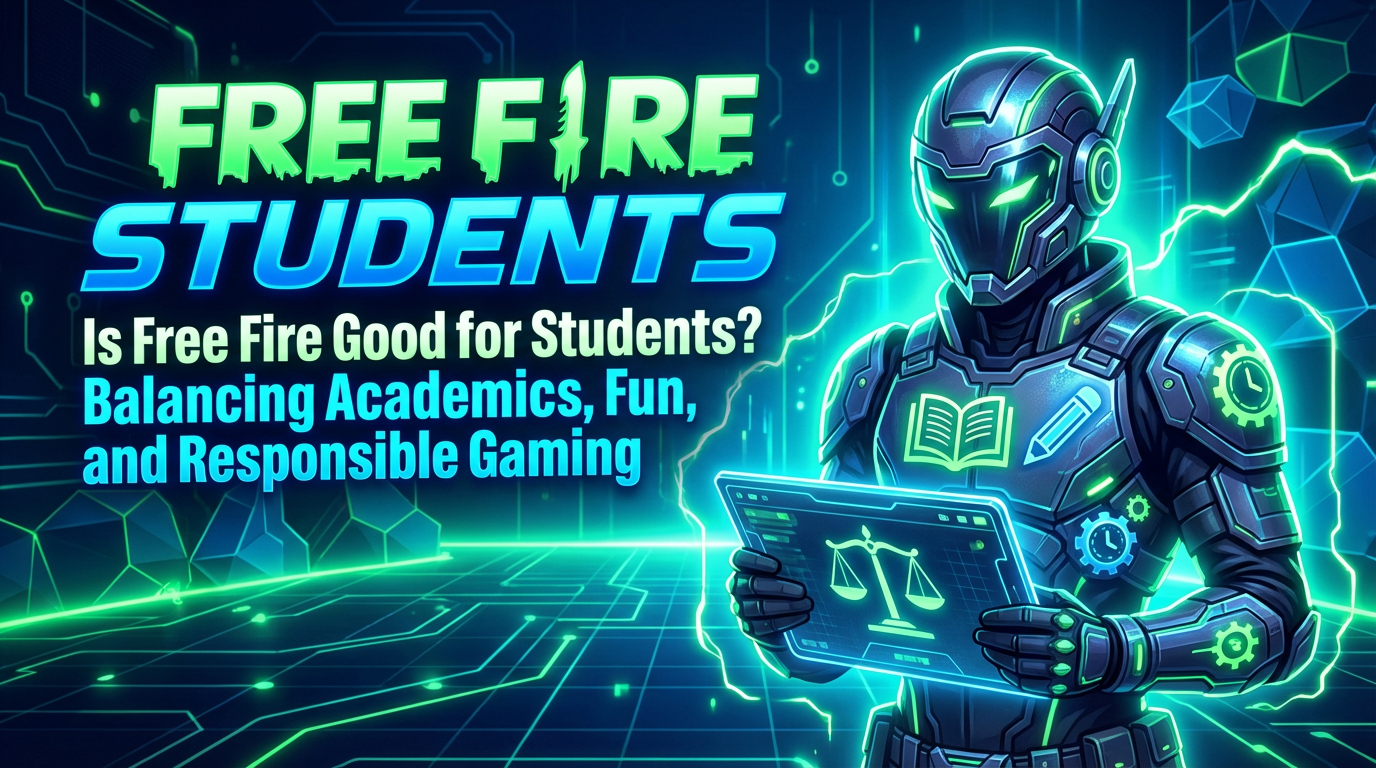
Garena Free Fire is not just a mobile game; it is a global phenomenon, particularly dominating the youth demographic in high-growth markets like India and Brazil. Its fast-paced, low-spec requirement makes it accessible to millions of students. This popularity naturally raises a vital question for parents, educators, and the players themselves: Is Free Fire good for students?
The answer is complex and not a simple yes or no. Like any activity, playing Free Fire presents a double-edged sword: it offers potential cognitive and social benefits but carries risks related to time consumption, academic distraction, and monetary spending. This comprehensive guide will objectively analyze the pros and cons, offering a final verdict and actionable tips for playing Free Fire responsibly while keeping academic success the priority.
1. What is Free Fire?
Free Fire is a mobile-first Battle Royale (BR) game where 50 players parachute onto an island to scavenge for weapons and supplies, fighting to be the last survivor. Its success among students stems from two key factors:
Accessibility: Its extremely low hardware requirements mean almost any student with a smartphone can play it smoothly.
Rapid Pace: Matches are short (around 10–15 minutes), perfectly fitting into short breaks between classes or study sessions, though this can also encourage just one more game syndrome.
2. The Pros of Playing Free Fire for Students
When played in moderation, Free Fire can deliver several positive developmental and cognitive benefits often cited by educational psychologists.
2.1 Enhancing Cognitive Skills and Focus
Quick Decision-Making: The core of the BR mode demands split-second decisions—to fight or hide, to heal or push. This constant pressure improves rapid response time and situational awareness, skills beneficial in high-pressure academic scenarios.
Spatial Reasoning: Navigating the map, predicting the shrinking safe zone (The Zone), and flanking opponents effectively demands strong spatial awareness and map reading, a cognitive benefit similar to that gained from strategic sports.
Improved Focus: While often blamed for distraction, engaging in focused, short bursts of high-intensity gameplay can improve a student’s ability to sustain attention on a single, complex task.
2.2 Fostering Social and Teamwork Abilities
Free Fire is inherently a social game, especially in the Squad or Clash Squad (CS) modes.
Communication Skills: Successful teamwork requires clear, concise, and immediate communication, often under stress. This practice translates directly to better collaborative skills needed for group projects and future professional environments.
Community Building: For students, especially those in distant or rural areas, the game serves as a crucial social platform, helping them maintain friendships and peer relationships. This is a significant factor in addressing the question, is Free Fire good for students? as social integration is vital for mental well-being.
Know Your Evidence (KYE): A study by the University of Technology Sydney (UTS) on video gaming often finds that strategically complex games can improve brain flexibility and reaction times by up to 25%, provided the gaming is done in balanced periods, not excessively.
3. The Cons of Playing Free Fire for Students
Despite the potential benefits, the risks associated with excessive play are significant, primarily impacting academic performance and personal finance.
3.1 Academic Distraction and Time Mismanagement
The addictive “just one more match” loop inherent in Free Fire’s fast-paced structure can lead to severe time mismanagement. Hours intended for homework or revision can quickly disappear, directly lowering grades and increasing stress during exam periods.
Sleep Deprivation: Late-night gaming sessions are a common issue, leading to chronic sleep debt, poor concentration in class, and negative health outcomes.
3.2 Financial and Psychological Risks
Is Free Fire safe from hackers and scams? This is a critical concern, especially regarding students and their digital literacy.
Students are particularly vulnerable to in-game temptations and scams. The search term “is Free Fire safe from hackers” highlights this fear. While Garena is vigilant about removing hackers, students are often targeted by third-party scams promoting “Free Diamond Generators”. These are typically phishing schemes designed to steal account details or prompt unauthorized in-game purchases, leading to financial strain on the family. Parents must educate students on these risks, as Garena does not reimburse losses due to unauthorized account access.
3.3 Tips for Playing Free Fire Responsibly
Parents and students can employ proactive strategies to mitigate the risks:
| Strategy | Description | Impact |
| Fixed Play Schedule | Designate specific, non-study times (e.g., 6:00 PM – 7:00 PM) for gaming. Use device timer tools. | Protects academic time and ensures quality sleep. |
| Budgeting for Diamonds | If purchasing, set a strict, small monthly budget. Never store linked credit/debit card details on the device. | Prevents impulse buys and financial stress. |
| Link Gaming to Rewards | Frame gaming time as a reward after completing academic tasks (e.g., “3 matches after the math assignment is finished”). | Reinforces the priority of schoolwork. |
4. Cognitive Health: Is Free Fire good for the brain?
While gaming can improve specific cognitive functions, labeling Free Fire as purely “good for the brain” is an oversimplification.
The benefit is tied to the Transfer Effect. The tactical planning in Free Fire’s BR mode—which involves resource management, enemy path prediction, and team strategy—trains the Prefrontal Cortex (responsible for complex planning). However, excessive screen time can negatively impact overall brain health by displacing activities crucial for development, such as reading, physical exercise, and creative problem-solving. Balance is the non-negotiable requirement for realizing any cognitive benefit.
5. Final Verdict: Is Free Fire Good for Students?
The answer to is Free Fire good for students? is Yes, but only under strict moderation and parental supervision.
When played responsibly, Free Fire is an excellent tool for developing teamwork, boosting reaction time, and maintaining social connections, particularly in the competitive mobile gaming culture of the target markets. However, without clear boundaries on time and spending, the addictive nature of the game can easily derail academic focus and expose young players to financial and security risks.
The responsibility lies with the player to prioritize their education and with the parents to implement structured playtimes and financial oversight. Education is the ultimate battle royale, and winning requires focus outside the game as well.
About the Author